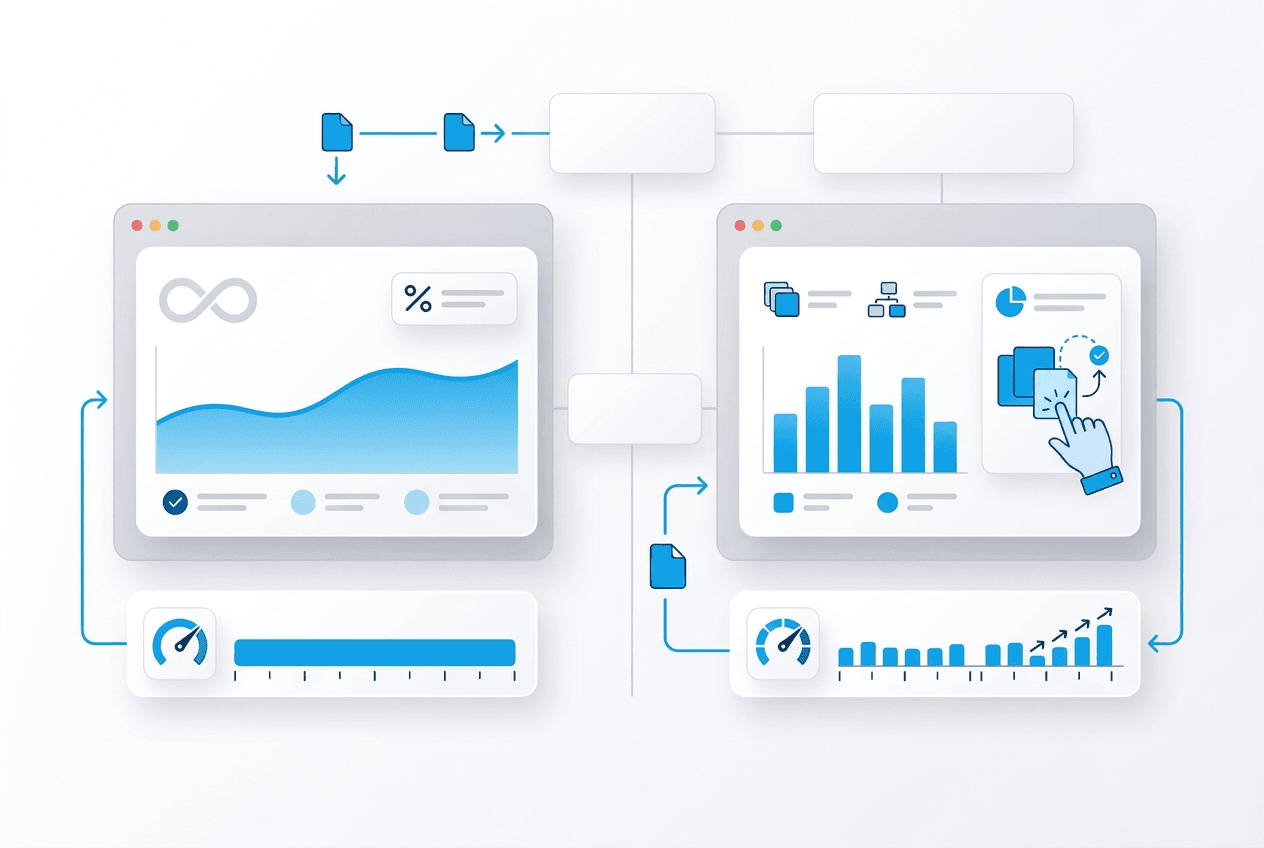
Unlimited bandwidth residential proxies
Unlimited bandwidth residential proxies charge by selected speed tier and plan duration instead of transferred gigabytes. Access still ends with the purchased duration. TrueProxies publishes unlimited bandwidth plans from $4.08/hour for 10 Mbps on its 50M+ Residential IPv4 network across 150+ countries.
What are unlimited bandwidth proxies?
Unlimited bandwidth proxies use a fixed-price model instead of charging per gigabyte. You select a speed tier (measured in Mbps), pay a flat rate for your chosen duration, and transfer as much data as that speed allows — with no per-GB charges and no data caps.
With per-GB billing, each request consumes data from a purchased or billed allocation. With a fixed-speed plan, cost is tied to the selected Mbps tier and duration. Compare current provider terms because packages and renewal behavior differ.
Per-GB cost varies with transferred traffic, which can make an unmeasured workload harder to forecast. A fixed-speed plan makes the selected duration predictable, while throughput remains capped by the chosen tier.
Neither model is universally cheaper. The result depends on expected gigabytes, required throughput, duration, retries, and the price tier available to the account.
How TrueProxies' unlimited bandwidth plans work
TrueProxies' unlimited bandwidth residential proxies are priced by speed tier and duration. You choose how fast you need your connection and how long you need it.
Published speed tiers range from 10 Mbps to 500 Mbps. Choose a tier by measuring target response time, request size, and concurrency; the selected Mbps rate limits throughput even though transferred data is not metered by the gigabyte.
Duration options: hourly, daily, weekly, or monthly. Compare the full price of the duration that covers your job instead of multiplying only the headline hourly rate.
Entry point: $4.08/hour for 10 Mbps. TrueProxies publishes unlimited-bandwidth residential plans alongside per-GB billing. Compare the current duration and speed tier with the official pricing pages for Bright Data, Oxylabs, and Decodo, because provider offers can change.
The unlimited and GB-Based products use the same published Residential IPv4 network and support HTTP, HTTPS, SOCKS5, location targeting, and sticky or rotating sessions. Confirm the exact controls shown for the selected subscription in the dashboard.
How the billing models differ
Per-GB billing ties cost directly to transferred traffic. That can suit intermittent jobs, while continuous high-volume workloads may be easier to budget with a fixed speed tier.
Unlimited-bandwidth plans price capacity through a selected speed tier and duration rather than measured gigabytes. The trade-off is a fixed throughput ceiling instead of a variable usage bill.
The official pages reviewed for Bright Data, Oxylabs, and Decodo displayed residential per-GB offers when checked July 12, 2026. Recheck their current terms before comparing them with TrueProxies' per-GB and fixed-speed options.
Who benefits most from unlimited bandwidth proxies
Continuous web scraping operations. When traffic is measured and sustained, compare the selected fixed-speed duration with the equivalent expected per-GB charge.
SEO monitoring at scale. A fixed-speed plan can make transfer charges predictable within the purchased duration, while the selected Mbps tier still limits throughput.
Ad verification teams. Repeated media-heavy checks can transfer substantial data, so measure one representative run before comparing billing models.
Social media agencies. Account workflows vary widely in transfer and concurrency, so compare measured usage with the throughput needed at peak times.
Testing and development. Frequent iterations can suit a short fixed-duration plan, while occasional low-transfer tests may remain cheaper per GB.
Unlimited bandwidth vs per-GB — which should you choose?
| Factor | Unlimited bandwidth | Per-GB |
|---|---|---|
| Billing variable | Selected speed and duration | Transferred gigabytes |
| Light or intermittent use | Compare the minimum duration price | Often aligns cost with actual transfer |
| Continuous use | Transfer is unmetered within the speed cap | Cost rises with transferred data |
| Capacity planning | Requires a throughput estimate | Requires a data-transfer estimate |
| Starting price | $4.08/hour | $1.64/GB |
Calculate both options for the same period. Multiply expected gigabytes by the applicable per-GB rate, then compare that total with the fixed price of the speed tier and duration that can deliver the required throughput. Include retries and successful-response rate in the final comparison.
TrueProxies publishes both billing products on the same Residential IPv4 network. Check current evaluation availability before planning a representative measurement, then choose the billing variable you can forecast more reliably.
Frequently asked questions
What does unlimited bandwidth mean for proxies?
It means your proxy plan has no data transfer cap. You pay a fixed price based on speed tier and duration, and transfer as much data as your connection allows. No per-GB charges or overage fees.
Is transferred data capped by the gigabyte?
No per-GB charge applies within the selected unlimited-plan duration. Effective capacity still depends on the speed tier, concurrency and new-connection controls, destination behavior, and retries.
How much data can I use on a 10 Mbps unlimited plan?
A 10 Mbps connection can theoretically transfer about 108 GB per day or 3.2 TB per month at sustained full speed. Actual throughput depends on target site response times and your scraper's concurrency.
How should I compare unlimited and per-GB residential plans?
The official pages reviewed for Bright Data, Oxylabs, and Decodo showed per-GB residential offers on July 12, 2026. Compare current pricing, throughput limits, traffic volume, and successful-response cost before choosing a provider.
Can I use unlimited bandwidth proxies for web scraping?
Yes. The unlimited bandwidth plan uses the published Residential IPv4 network with location targeting, standard proxy protocols, and sticky or rotating sessions. Compare its speed-and-duration price with measured per-GB usage for your crawler.