
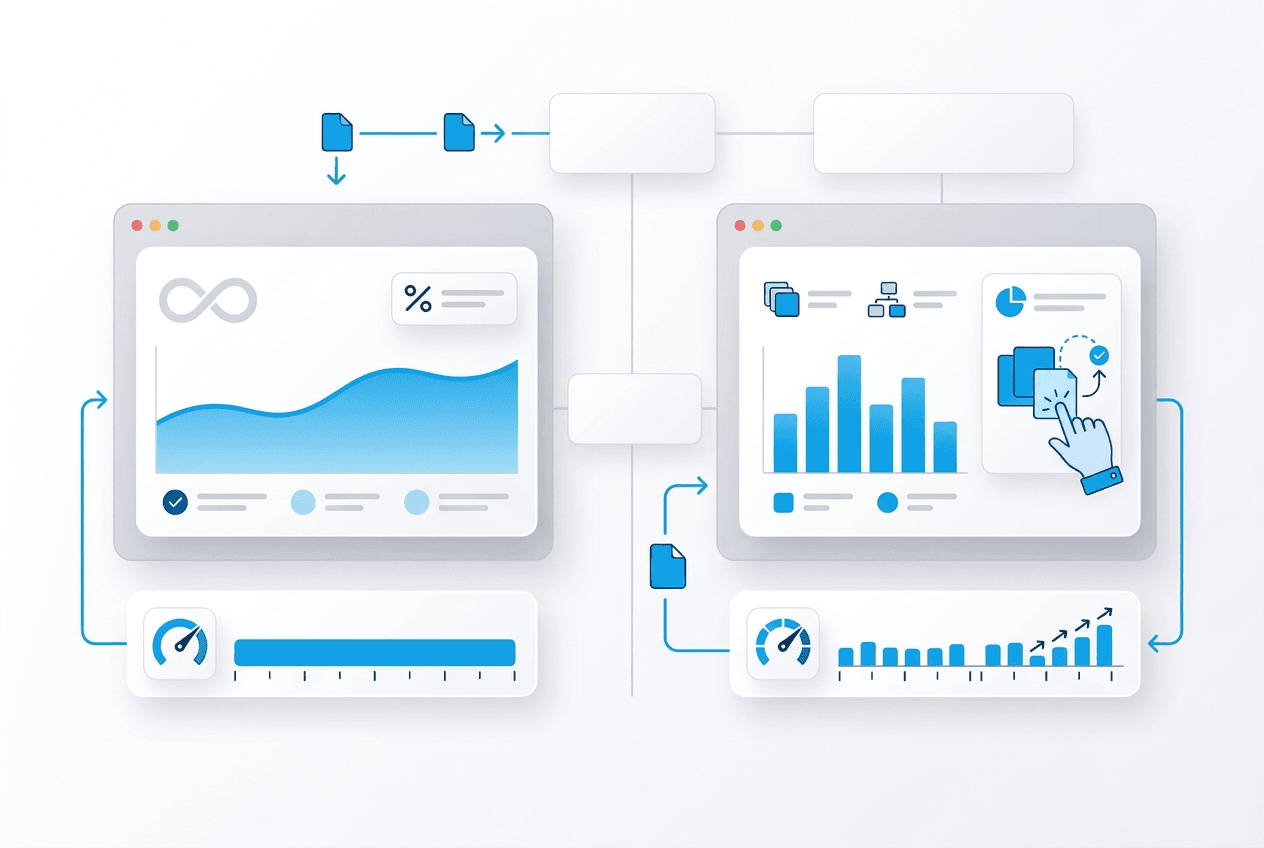
The pricing model changes the economics more than the proxy type
Teams often spend a lot of time comparing providers and not enough time comparing billing models. With residential proxies, the biggest cost difference usually comes from how usage is charged: unmetered access or GB-based billing.
Both models can be cost-effective. The right answer depends on whether your traffic is continuous or intermittent, how predictable your bandwidth is, and whether you value a fixed monthly budget over lower entry cost.
What unmetered residential proxies mean
An unmetered plan gives you a fixed monthly price with no per-GB billing. At TrueProxies, that means you choose a speed tier and run as much traffic as your workload needs.
- Best for always-on crawlers and recurring monitoring jobs.
- Easier to budget because monthly cost does not spike after a large crawl.
- Useful when multiple teams or automations share the same residential pool.
What GB-based residential proxies mean
GB-based billing charges only for the traffic you transfer. That makes it easier to test a workflow, launch a proof of concept, or support workloads that run in bursts rather than all day.
- Good for SEO rank checks and periodic market research jobs.
- Lower barrier to entry when you are still measuring bandwidth needs.
- More efficient for teams with highly variable monthly demand.
A simple decision framework
| Workload pattern | Usually better fit | Why |
|---|---|---|
| 24/7 scraping or verification | Unmetered | Predictable spend and no traffic penalty |
| Daily or weekly rank checks | GB-Based | Light requests do not justify fixed-speed billing |
| New project with unknown traffic | GB-Based | Lower commitment while you establish benchmarks |
| Stable production crawler | Unmetered | Removes bandwidth variance from the cost model |
Where each model shows up in real workloads
For proxies for web scraping, unmetered pricing usually wins once the crawl is continuous. A catalog crawler running every day can burn through paid traffic faster than teams expect, especially when retries and anti-bot defenses increase request count.
For SEO monitoring, GB-based pricing often makes more sense because rank checks are lightweight. You are paying for snapshots, not for constant page traversal.
Ad verification and social media management usually trend toward unmetered if they run continuously. Market research and brand protection often start on GB-based plans and only move to unmetered when the job becomes always-on.
How to decide without guessing
- Run your workflow for a week on a measured plan.
- Record total bandwidth, retry rates, and concurrency peaks.
- Project that usage across a full month.
- Compare the projected GB spend against a fixed unmetered plan.
- Switch once the production workload becomes stable.
The practical recommendation
Start with Residential IPv4 (GB-Based) when you are testing or when the workload is light and periodic. Move to Residential IPv4 (Unmetered) when the job becomes continuous, multi-user, or expensive to predict month to month.
If you are still deciding between proxy classes as well as pricing, read our comparison of residential and datacenter proxies next.