01
Billions of authentic IPv6 addresses
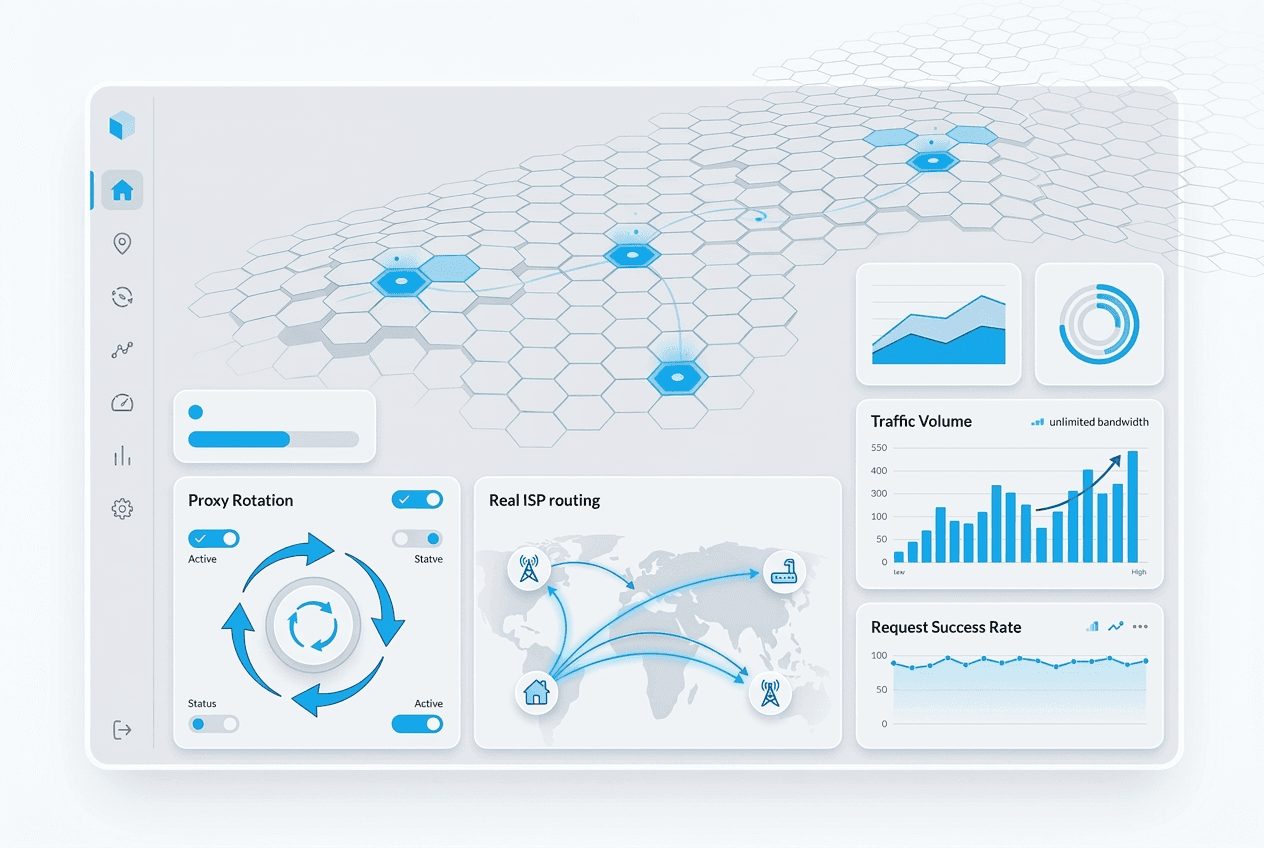
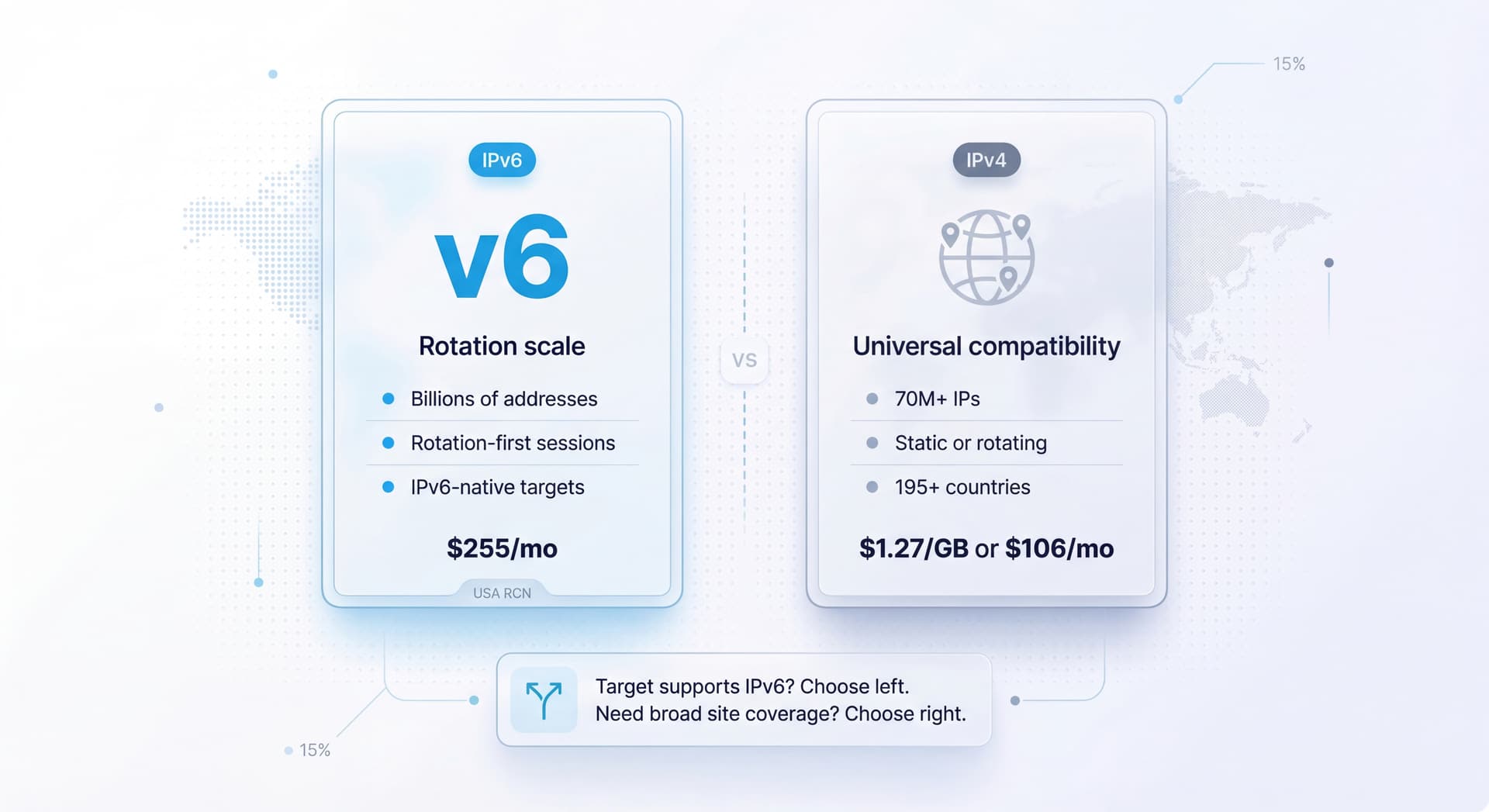
Residential IPv6 brings access to an enormous address space that is difficult to exhaust and useful for workflows that benefit from high rotation diversity. That gives teams more room to distribute requests without leaning on recycled IPv4 pools.
02
Real ISP-origin traffic
These addresses come from real ISP environments rather than datacenter ranges. That matters when targets score trust based on origin quality and are more receptive to residential traffic than infrastructure IP space.
Residential IPv6 is built around rotating behavior rather than long sticky sessions. The product is designed for workloads where fresh IP assignment is a feature, not a fallback after static sessions become risky.
Bandwidth is not metered separately, so teams can focus on request strategy and success rate rather than planning every gigabyte. That keeps large IPv6-compatible workloads simpler to operate at scale.
The current published footprint centers on our own US ISP residential network. That makes the product a strong fit for US-focused testing, research, and automation that specifically benefits from IPv6-native residential reputation.
06
HTTP, HTTPS, and SOCKS5
The connection layer stays consistent with the rest of the TrueProxies lineup, so developers can keep one integration pattern even when the target environment requires IPv6 residential traffic specifically.
07
Flexible authentication
Both IP whitelist and username/password auth are supported. That makes it straightforward to move from local validation into distributed automation without changing the product or reworking the integration.
IPv6 is often chosen when the goal is request distribution across a very large address surface. This plan is optimized for that operational style rather than small-pool session persistence.
09
In-house infrastructure
Routing and delivery stay inside the TrueProxies stack, which gives support direct visibility when diagnosing latency, auth, or network-quality questions instead of routing issues through multiple vendors.
10
Residential trust profile
Because traffic originates from real ISP environments, the product keeps the residential trust advantage that matters for sensitive targets, verification flows, and environments where pure speed is not the only requirement.
Support is available through live chat and Telegram every day. That matters when you are testing IPv6 compatibility and need quick confirmation on whether the constraint is the target, the toolchain, or the connection method.
If a target ends up being IPv4-only, you can move back to residential IPv4 without relearning the platform. The connection model stays familiar even when the address family changes.