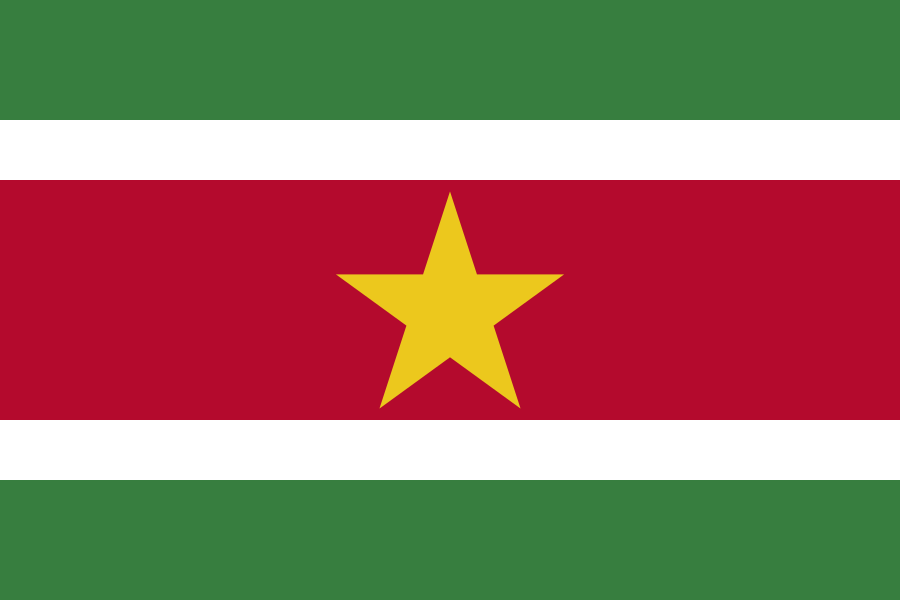
Dutch is the official language of Suriname, the only country in South America where that is true, so local shop sites, news and many ads are in Dutch, while everyday talk on social media mixes Dutch with Sranan Tongo, Sarnami and Javanese. Prices are set in Surinamese dollars (SRD), but cars, appliances, rents and property are often quoted in US dollars or euros, a habit that grew as the SRD lost much of its value from 2020. Payment options include cards, bank transfers and local wallets such as Mopé and Uni5Pay+, which pays by QR code in shops and at some web shops.
Starnieuws, De Ware Tijd, Waterkant and Suriname Herald are the main news sites and the places to confirm how local display campaigns appear. For prices, teams track the retail chain Kirpalani's, the telecom operators Telesur and Digicel, and fares on the Paramaribo–Amsterdam route, which is shaped by the large Surinamese community in the Netherlands and its holiday travel.
Google is the main search engine, but Dutch-language queries also match a huge volume of pages from the Netherlands and Belgium, so ranking checks need to run from Surinamese connections to see .sr domains, Surinamese businesses and local listings as residents do. A check from Amsterdam and one from Paramaribo can return very different first pages for the same words. Suriname has no general data-protection law yet.
Suriname's calendar mirrors its many communities, and shopping peaks follow it. Chinese New Year, Holi Phagwa, Ied-ul-Fitr and the Sacrifice Feast, Divali, Christmas and Boxing Day are all official public holidays, alongside Keti Koti on 1 July, Indigenous Peoples' Day on 9 August, Maroon Day on 10 October and Independence Day on 25 November. Each brings its own food, clothing and gift buying, so a price series for groceries, fabric or electronics should mark these dates. The year ends with the Owru Yari celebrations in Paramaribo, and December is a common time for family visits from the Netherlands, which lifts demand for flights and rooms.