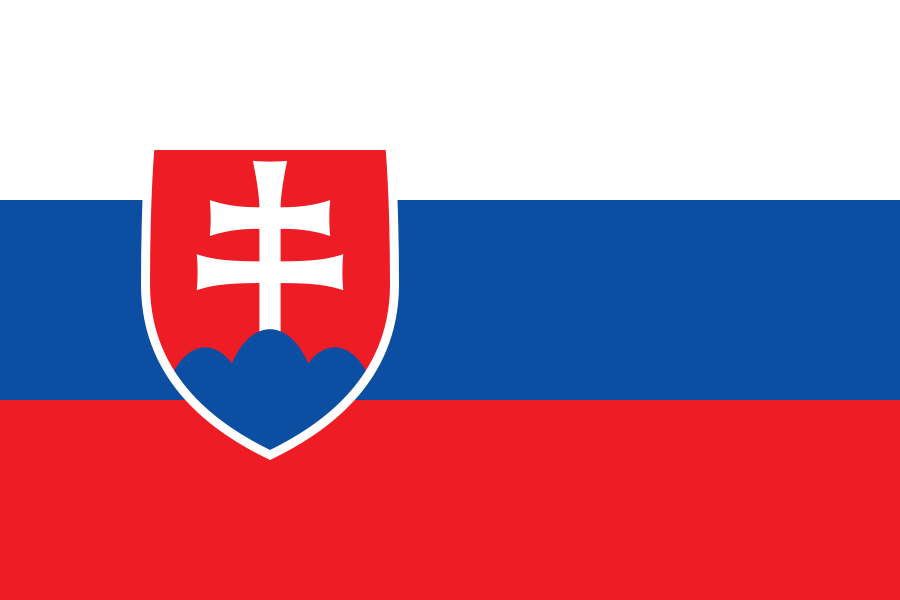
Slovak shoppers have paid in euros (EUR) since the koruna gave way to the single currency at the start of 2009, so Slovak web prices can be set directly beside Austrian and other eurozone ones, while shops across the Czech border still quote crowns. Since 1 January 2025 those prices carry VAT at 23%, up from 20%, with reduced rates of 19% and 5% for categories such as some foods, medicines, books and accommodation. Order pages usually list cards, cash on delivery (dobierka) and a bank transfer with a PAY by square QR code, which the Slovak Banking Association treats as the national format for payment QR codes, so paying means pointing a phone's banking app at the code. Delivery to a Packeta pickup point or Z-BOX locker is offered next to courier and post.
Many purchases start on Heureka.sk or Pricemania.sk, which compare offers from thousands of web shops. Alza.sk and Nay.sk sell electronics, Martinus.sk sells books, and Allegro opened Allegro.sk in February 2024 and shut the old Mall stores during 2025. Bazoš.sk handles general classifieds, Autobazar.eu used cars, Nehnutelnosti.sk flats and houses, and Profesia.sk job ads. Wolt and Bolt Food take restaurant orders in the larger cities, and SME, Aktuality.sk, Denník N, Pravda and Topky are big sources of display inventory.
Search is effectively a one-engine market: Google handles most Slovak queries, and no domestic rival plays the part Seznam does next door. Slovaks read Czech with ease, so Czech-language pages and .cz shops can surface in google.sk results for Slovak queries. People also type without the marks on letters such as ä, ô, ľ and ť, and results can change when they do. Slovak personal data rules are the GDPR plus Act No. 18/2018 Coll. on Personal Data Protection.
Regional splits matter more than the country's size suggests. Bratislava borders both Austria and Hungary and lies about an hour's drive from Vienna, so shoppers in the capital region weigh Austrian prices too, and incomes and rents there run well ahead of the east. Hungarians are the largest minority and, according to the 2021 census, form the majority in the Komárno and Dunajská Streda districts, where Hungarian-language creative and outlets such as the daily Új Szó reach readers that Slovak copy misses. Košice, the second city, anchors the east, so property and rent comparisons on Nehnutelnosti.sk work better region by region than as one national figure.